How to Care for Emerald Jewellery Without Damaging It
Emerald jewellery care starts with gentle cleaning and careful storage. Learn what to avoid, when to stop, and when a jeweller should assess a stone.
You take off an emerald ring after washing your hands and notice a film beneath the setting. Emerald jewellery care is usually a matter of gentle handling, mild cleaning and sensible storage, with one important caution: emeralds can have surface-reaching fractures or treatments that make harsh cleaning unsuitable.
How should you clean emerald jewellery?
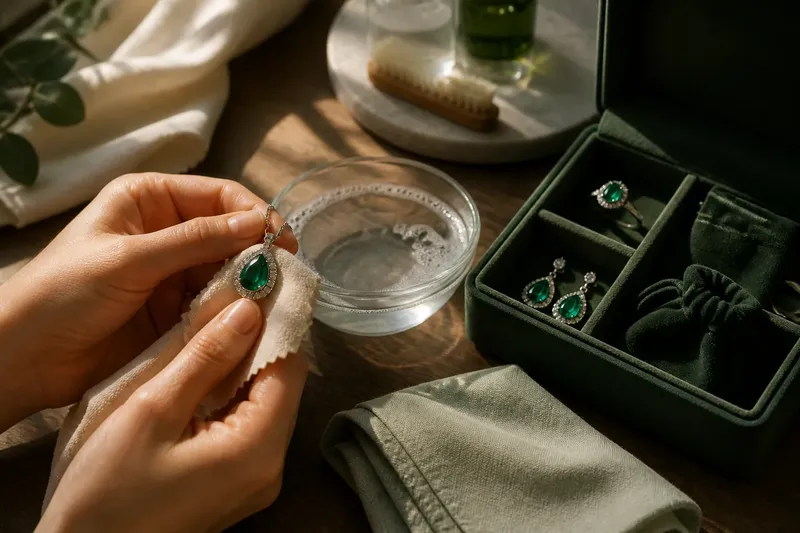
For routine cleaning, use lukewarm water, a small amount of mild washing-up liquid and a soft, clean cloth or soft-bristled brush. Work gently around the stone and setting, then rinse carefully and pat dry with a lint-free cloth. Keep the plug in the sink or use a bowl so a loose piece cannot slip down the drain.
Avoid ultrasonic and steam cleaners unless a qualified jeweller who knows the stone has specifically confirmed that the piece is suitable. Vibrations, heat and pressure may worsen existing fractures or affect oils and resins sometimes used to improve an emerald’s appearance. Do not use bleach, household cleaners, abrasive powders or stiff brushes.
If you are unsure how the emerald has been treated, stick to a soft, dry cloth and ask a jeweller before using water or cleaning products. A professional can advise on the particular stone and setting; a general cleaning method cannot account for every treatment or condition.
How can you store emeralds safely?
Store each piece separately in a soft pouch or a lined jewellery box, away from harder gems and metal edges that could scratch it. Keep jewellery in a cool, dry place, away from direct sunlight, radiators and sudden temperature changes. A compartment that prevents pieces from knocking together is more useful than elaborate packaging.
Take emerald jewellery off before gardening, cleaning, sport or work that involves knocks, grit or chemicals. Put it on after applying cosmetics, perfume and hairspray, and remove it before bathing or swimming. These habits reduce avoidable contact with substances and impacts; they do not eliminate the need for occasional professional checks.
What should you check before cleaning or wearing it?
- Loose stone: If the emerald moves or rattles, stop wearing and cleaning the piece and take it to a jeweller; if it feels secure, proceed gently and watch for any change.
- Visible chip or crack: If you see fresh damage, avoid brushing or rubbing that area and ask a jeweller to assess it; if no damage is apparent, use only light pressure.
- Unknown treatment: If you do not know whether the stone has been oiled or filled, avoid heat, steam and ultrasonic cleaning and seek advice; if a qualified jeweller confirms a suitable method, follow that guidance.
- Delicate setting: If claws, bezels or links look bent or worn, set the piece aside for inspection; if the setting appears intact, clean around it without pulling or pressing on the stone.
- Cleaning product: If the label lists bleach, ammonia or abrasive ingredients, do not use it on emerald jewellery; if the product is mild washing-up liquid, dilute a little in lukewarm water and use it sparingly.
- Storage contact: If another piece can rub against the emerald, move the items into separate compartments or pouches; if each piece is isolated, close the box and keep it away from heat and direct sun.
When is professional attention the better choice?
Ask a qualified jeweller to inspect a stone that has become loose, chipped or newly cracked, or a setting that catches on clothing. Professional attention is also sensible before cleaning an antique piece, an heirloom with an unknown history, or an emerald whose treatment is undocumented.
Do not try to tighten a setting with household tools or fill a chip with glue. Such repairs can damage the mount, complicate later work or obscure the condition of the stone. A jeweller can explain whether cleaning, repair or further gemmological assessment is appropriate.
What do people often ask about emerald care?
Can I clean an emerald with washing-up liquid?
For a stable piece with no known treatment concern, mild washing-up liquid diluted in lukewarm water and a soft brush or cloth is a cautious option. If the stone’s treatment or condition is uncertain, ask a jeweller first and avoid soaking or vigorous brushing.
Can emerald jewellery get wet?
Brief, gentle cleaning may be suitable for some pieces, but prolonged soaking is not a good default, particularly when the setting or treatment is unknown. Remove emerald jewellery before swimming, bathing or washing up, and dry it promptly if it gets wet.
Are ultrasonic cleaners safe for emeralds?
Do not assume they are safe: vibration can aggravate fractures, and heat or cleaning solutions may affect treatments. Use one only if a qualified jeweller familiar with the stone has advised that it is appropriate.
How can I tell if an emerald needs a jeweller?
Stop wearing it if the stone moves, a new crack or chip appears, or the setting looks bent or worn. A jeweller can inspect the mount and advise on safe cleaning or repair; appearance alone cannot establish the stone’s full condition.
What does cautious care look like in practice?
Imagine you have an emerald pendant with an unknown treatment and a little residue near its clasp. You first check that the stone does not move and that the clasp and setting look intact. Because the treatment is unknown, you choose not to soak it or use a brush; you wipe the pendant’s metal gently with a dry, soft cloth and leave the stone alone.
You then note the pendant’s condition and ask a qualified jeweller whether a mild water-based clean is suitable. The immediate result is that you avoid exposing an uncertain stone to heat, vibration or cleaning fluid, while the jeweller’s assessment determines the next safe action. That restraint is more useful than trying several products in search of a quick shine.
Which care habits are not worth the effort?
There is little benefit in buying a specialised cleaner before you know whether the emerald’s treatment and setting make it suitable. Polishing the stone repeatedly, using a phone torch to inspect every mark or trying to remove residue with a pin can create more risk than useful information.
For everyday emerald jewellery care, keep the routine simple: handle the piece gently, separate it from harder jewellery, avoid heat and harsh products, and seek qualified advice when damage or uncertainty appears. If a cleaning attempt reveals a loose stone or fresh flaw, stop there; the next useful step is an assessment, not stronger pressure.